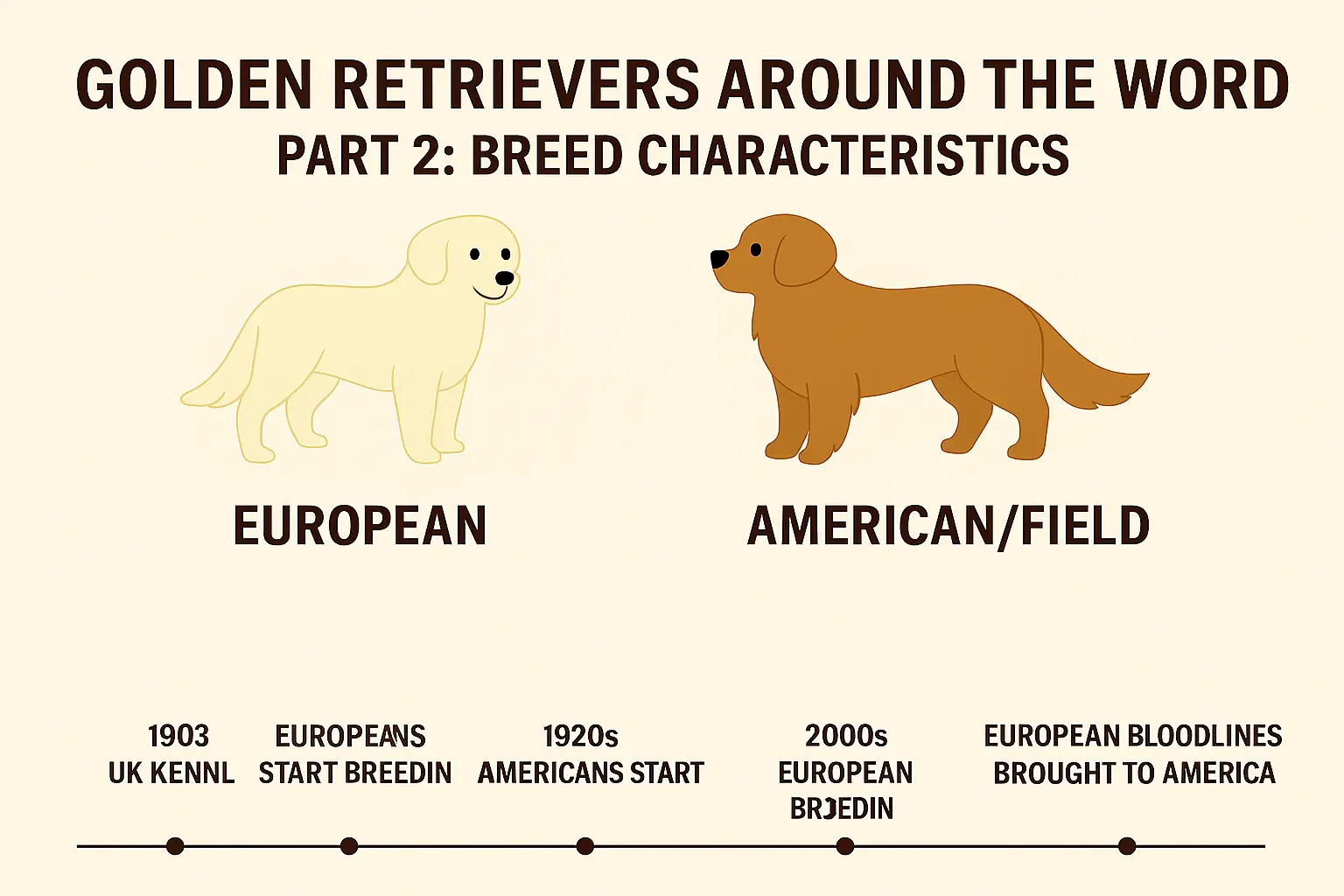
Golden Retrievers Around the World: Part 2 – Modern Goldens, Mixing, and Globalization
In Part 1 of this series, we traced the history of Golden Retrievers from their origins in Scotland to their split into two distinct “types” by the mid-20th century: calmer, cream-colored show dogs in the UK and athletic, darker field dogs in the U.S. That divergence happened because people valued different traits depending on where they lived.
But the story didn’t stop there. As breeders began trading dogs across the Atlantic again, the two “types” started blending. Today, Goldens are more varied, and more versatile, than ever.
The Atlantic Exchange
By the 1970s, American breeders began importing European Goldens to broaden the gene pool and reduce the effects of inbreeding. Along with new genetics came a different style, including blockier heads, lighter coats, and calmer temperaments. These dogs became especially popular in American, and marketing terms like “English Cream Golden Retriever” became common, even though the AKC does not recognize cream as a separate color.
Meanwhile, field breeders continued selecting for hunting ability and preserving the lean, high-drive dogs they had developed.
For the first time in nearly a century, the two bloodlines were no longer developing separately. Breeders were once again blending genetics from both sides of the Atlantic.
The 1990s–2000s: Blending Becomes Normal
By the late 20th century, Goldens weren’t confined to one mold. Breeders had options:
- Stick to American field lines for performance and drive.
- Stick to European show lines for looks and temperament.
- Or blend the two, creating dogs that had a little of both.
Genetic research confirmed this picture. Studies showed that American and European Goldens formed two identifiable clusters, proof of their different histories. But there was also overlap, dogs with European ancestry in American lines and vice versa. This overlap is exactly what you’d expect in a breed that had begun trading across borders again.
Science also confirmed something breeders already knew: coat color alone doesn’t define a dog’s type. Light-colored Goldens could still carry plenty of energy and drive. Darker Goldens could still be calm and steady. What mattered most wasn’t geography, but what each breeder was selecting for.
people often think “English Creams are calmer” or “American Goldens are more energetic,” but the truth is more nuanced. Those are tendencies, not guarantees.
The Modern Golden Retriever
So what does all of this mean today? In short, we no longer have two separate “types” as much as we have a spectrum.
In Europe and the UK, light gold still dominate the show rings. These dogs are known for their calmness and are often chosen as therapy or service animals. Working lines do exist in Europe, but they’re a smaller community compared to the show side.
In America, diversity is the name of the game. Pale European imports show up in the conformation ring, while deep red field dogs still dominate hunting circles. And in between, countless breeders blend the two, producing Goldens that are moderate in energy and versatile in roles.
This flexibility is why Goldens have become such an all-purpose breed today. They excel in hunting and search-and-rescue, but they also shine as service animals, therapy dogs, and family companions. They’re capable of being high-drive athletes or mellow household pets, depending on the vision of the breeder and the needs of the family.
Not Just Goldens
Golden Retrievers aren’t unique in this story. Geography and culture have shaped many breeds:
- Labradors split into heavier-boned English Labs and slimmer, high-drive American Labs.
- German Shepherds developed into angulated European show dogs and straighter-backed American working lines.
- Border Collies range from conformation winners to intense farm workers, depending on what’s valued.
- Even livestock like cattle or horses show the same trends: in America, animals often bred for utility and stamina; in Europe, sometimes for appearance or tradition.
This isn’t random, it’s how selective breeding works everywhere.
The Golden Truth
If you lined up ten of them from different kennels and countries, you’d see a rainbow of coats from light to red, temperaments from mellow to spirited, and builds from heavy-set to sleek. All of them, though, would share that unmistakable Golden heart: loyal, intelligent, and eager to please.
So why do Goldens look so different around the world? Because people asked different things of them, and then, over time, started blending those differences back together. The breed has always reflected human culture, from the hunting estates of Scotland to the duck blinds of America to the therapy halls of hospitals today.
Goldens don’t just tell the story of dogs. They tell the story of us, our traditions, our lifestyles, and the traits we prize most.